
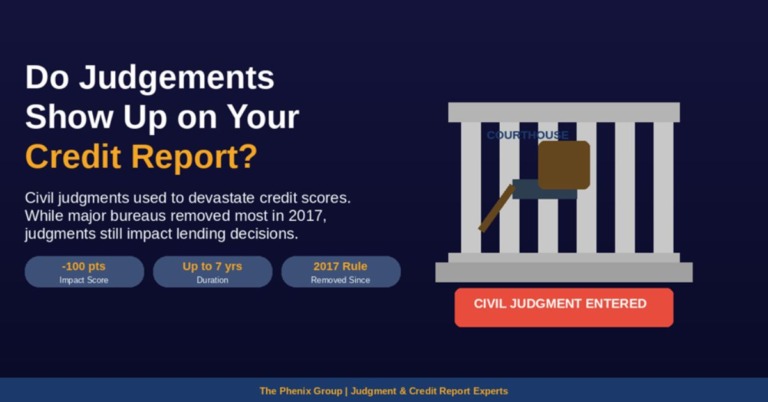
If you’ve recently had a civil judgment filed against you, you’re likely panicking about your credit. Here’s what you need to know immediately: as of 2018, major credit bureaus, Experian, Equifax, and TransUnion, no longer include civil judgment records on credit reports. This was a major policy change, and many people (including some financial advisors) are still unaware of it.
But that doesn’t mean you’re in the clear. Judgments still carry serious financial consequences, and they can still affect your credit indirectly. Let’s break it all down.
What Happened in 2017–2018? The NCAP Changes Explained
The National Consumer Assistance Plan (NCAP) was an agreement between the three major credit bureaus and 31 state attorneys general to improve the accuracy of credit reporting. As part of this initiative:
- All civil judgment records were removed from Experian, Equifax, and TransUnion credit reports beginning in July 2017.
- All tax lien records were also removed (a separate but related change).
- The reason: Judgments and tax liens too frequently contained errors, wrong person matches, outdated information, insufficient identifying details.
If you pull your credit report today, you will NOT see a civil judgment listed, even if one exists in public court records. If you’re also dealing with bankruptcy reporting concerns, our guide on dismissed bankruptcy credit report explains how dismissed filings may still appear and what it means for your profile.
Can Judgments Still Hurt My Credit Indirectly?
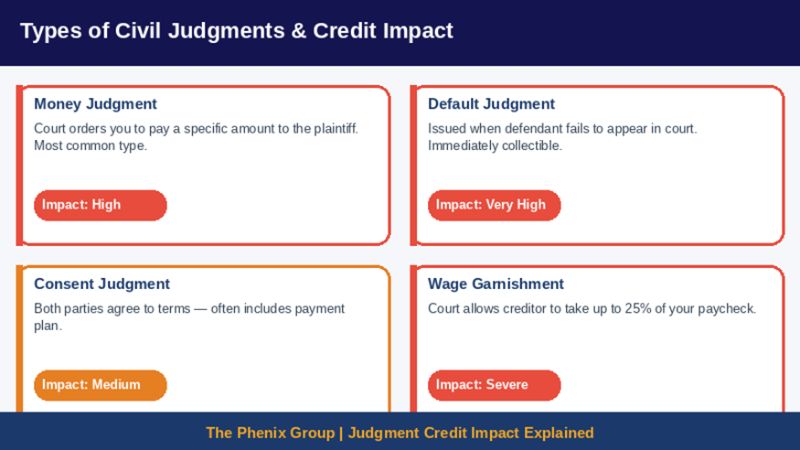
Yes, and this is the critical nuance most articles miss. While a judgment itself doesn’t appear on your credit report, the financial fallout from a judgment absolutely can:
- Wage Garnishment: A creditor with a judgment can garnish your wages, reducing your income and potentially making it harder to pay other bills, which creates late payments and collections on your credit report.
- Bank Account Levies: Creditors can freeze and seize funds from your bank accounts.
- Property Liens: A judgment lien on your property can prevent a home sale or refinance until satisfied.
- New Collections: If the original debt was sold to a collector after the judgment, that collection can appear on your credit report. In those situations, learning how to remove derogatory items can help address related negative marks.
What to Do If You Have an Active Civil Judgment
- Option 1: Negotiate a Settlement – Many creditors who hold judgments will negotiate a lump-sum settlement for less than the full amount.
- Option 2: Motion to Vacate – If the judgment was entered incorrectly or you were not properly served, you may be able to challenge it in court.
- Option 3: Satisfy the Judgment – Paying the judgment in full eliminates the creditor’s legal leverage, even if it doesn’t appear on your credit report.
- Option 4: Bankruptcy – In some cases, bankruptcy can discharge the underlying debt behind a judgment. Before pursuing outside help, it may also help to understand how credit repair services work and whether they fit your situation.
For step-by-step guidance on removing judgment-related items from your credit file, read our companion guide on how to get judgments off your credit report.
Frequently Asked Questions
Q: Does a satisfied judgment improve my credit score?:
A: Since judgments don’t appear on credit reports, satisfying one won’t directly move your score. However, eliminating the creditor’s ability to garnish wages or levy accounts can help you maintain better payment history going forward.
Q: Can I check if a judgment exists against me outside of my credit report?:
A: Yes. Court records are public in most jurisdictions. You can check your county or state court’s online docket search for any civil filings against your name.
Q: If judgments aren’t on credit reports, why are lenders still asking about them?:
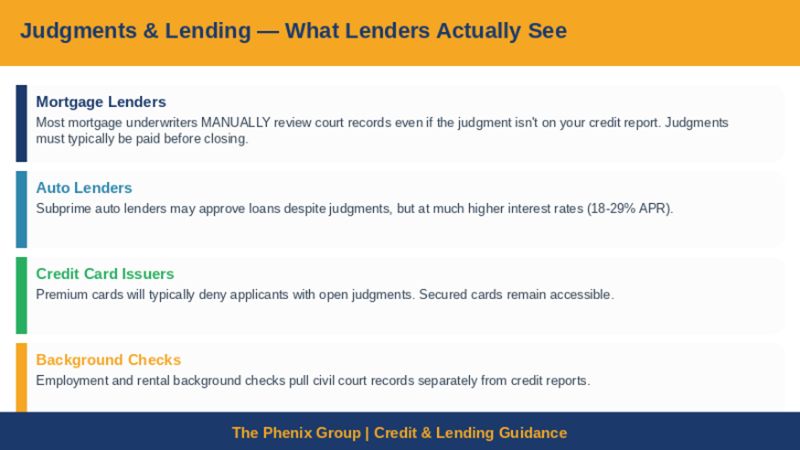
A: Lenders, especially mortgage lenders, often conduct public record searches separately from credit pulls. A judgment in court records can still be a red flag for lenders even if it’s not on your credit report.
