
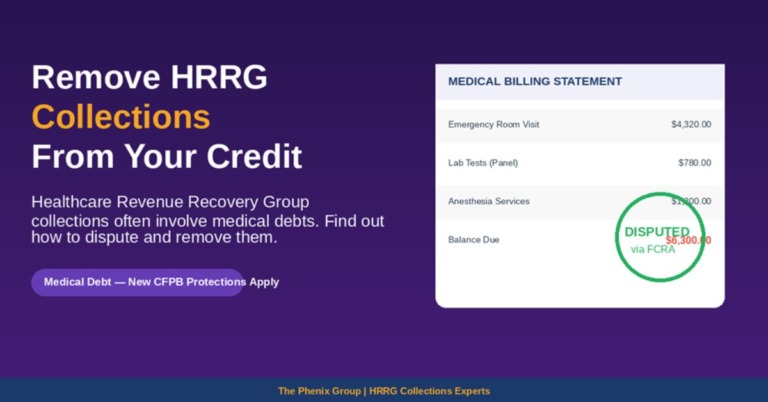
If HRRG, or Healthcare Revenue Recovery Group, has appeared on your credit report, you’re dealing with a medical debt collector. Medical collections are among the most common, most confusing, and often the easiest negative items to challenge or remove derogatory items from your report. Here’s everything you need to know.
What Is HRRG (Healthcare Revenue Recovery Group)?
HRRG, formally known as Healthcare Revenue Recovery Group, is a third-party medical debt collection agency. They purchase or manage unpaid medical bills on behalf of hospitals, clinics, emergency rooms, and other healthcare providers. When your medical provider is unable to collect payment, they may sell or assign your account to HRRG, who then reports it to the credit bureaus.
HRRG is a legitimate company, but their reporting is not always accurate. Billing errors in the medical industry are extraordinarily common, and it’s not unusual for HRRG to collect on debts that were never properly adjudicated with insurance, billed incorrectly, or that belong to a different patient entirely.
If you’ve dealt with other collection agencies before, our guide on IC System on your credit report may also be helpful.

New Rules: Can HRRG Still Appear on Your Credit Report in 2026?
Major changes to medical debt reporting have shifted the landscape:
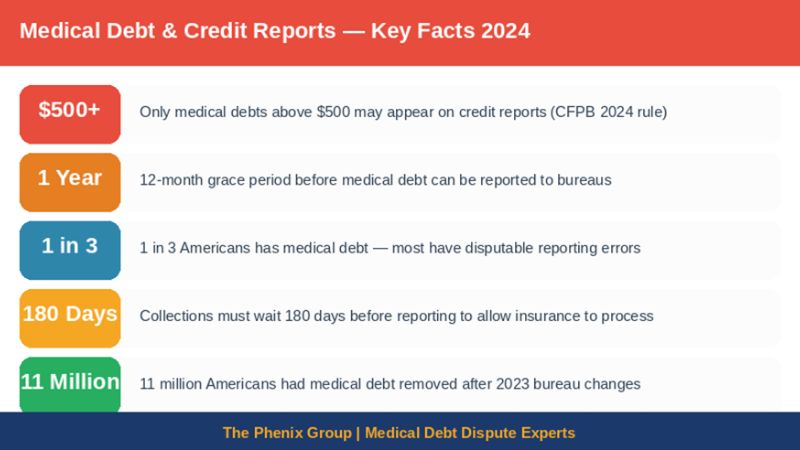
- Since July 2022: Medical collections under $500 no longer appear on Experian, Equifax, or TransUnion credit reports.
- Since 2023: Paid medical collections were removed from all three major bureaus.
- CFPB 2025 Proposal: The Consumer Financial Protection Bureau has proposed a rule to eliminate all medical debt from credit reports entirely. As of 2026, this ruling is still working through regulatory channels, check the CFPB website for the most current status.
If an HRRG collection appears on your report and falls under the $500 threshold, or if it’s a paid account, you may have grounds for immediate removal.
Depending on where you live, state laws can matter too. Consumers should understand Pennsylvania medical debt collection law and similar state-specific protections that may affect collection rights and defenses.
How to Dispute HRRG Collections Step by Step
- Step 1: Verify the debt: Request a complete itemized statement from HRRG AND from the original healthcare provider.
- Step 2: Check your insurance records: Was this bill submitted to your insurer? Was it denied? Was there an appeal?
- Step 3: File a bureau dispute: If HRRG’s information is inaccurate or unverifiable, dispute with all three bureaus simultaneously.
- Step 4: Send a debt validation letter: Under the FDCPA, HRRG must provide written verification of the debt.
- Step 5: File a HIPAA-aware complaint: If HRRG received your medical information improperly, there may be a HIPAA angle that strengthens your dispute.
If your own efforts fail, some consumers explore professional credit repair services to challenge stubborn or inaccurate accounts.
Frequently Asked Questions
Q: Is HRRG a scam?:
A: No. HRRG is a legitimate, licensed medical debt collection agency. However, mistakes in their reporting are common and your rights to dispute are protected by law.
Q: Does HRRG do pay for delete?:
A: HRRG may negotiate deletions in some cases, particularly if the debt amount is modest or there are verification issues. Always get any agreement in writing before paying.
Q: How long does HRRG stay on my credit report?:
A: Medical collections follow the standard 7-year rule from the date of first delinquency. But given recent rule changes, many HRRG accounts may be removable sooner, especially if under $500 or already paid.
Q: Should I pay HRRG directly or dispute first?:
A: In most cases, dispute first. Validate the debt, check for errors, and verify insurance coverage before making any payment. Paying doesn’t guarantee removal, and you want to know you actually owe the debt before settling.
