
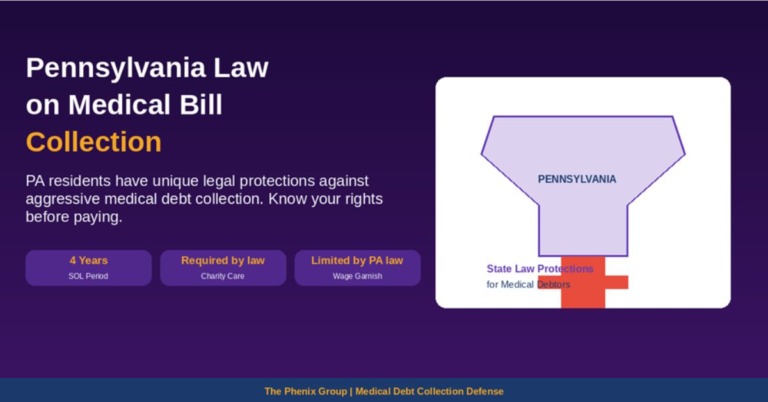
Medical debt is the leading cause of personal bankruptcy in the United States, and Pennsylvania residents are not immune. Whether you’ve received a collections call from a medical billing company or found a medical collection on your credit report, understanding your legal rights under both Pennsylvania law and federal statute is the first step to protecting yourself.
Federal Protections: How the FDCPA Applies to Medical Debt in PA
The Fair Debt Collection Practices Act (FDCPA) is the primary federal law governing how third-party debt collectors, including medical debt collectors, can operate in all 50 states, including Pennsylvania. Under the FDCPA, medical debt collectors in PA:
- CANNOT call before 8 AM or after 9 PM
- CANNOT use harassment, abuse, or threatening language
- CANNOT make false statements about the debt or your legal status
- MUST identify themselves and the purpose of the call
- MUST send a written validation notice within 5 days of first contact
- MUST cease contact if you send a written request to stop
Violations of the FDCPA entitle you to statutory damages of up to $1,000 per case, plus actual damages and attorney’s fees.
If inaccurate medical collections are affecting your report, you may also want to learn how to remove derogatory items that should not be there.
Pennsylvania’s Own Consumer Protection Laws for Medical Debt
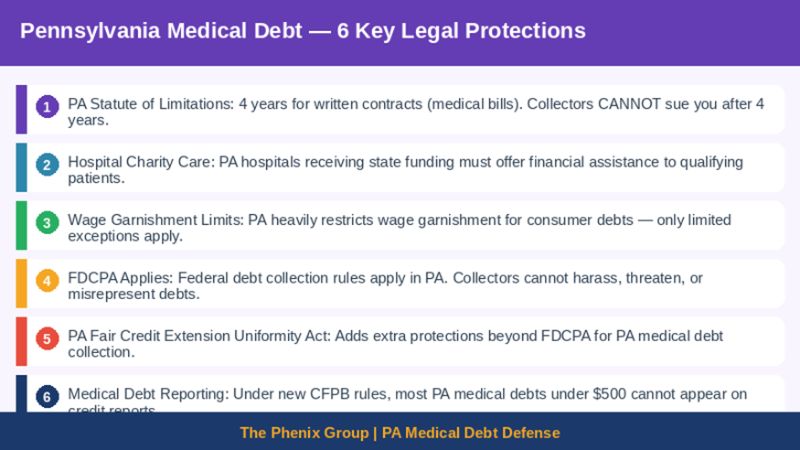
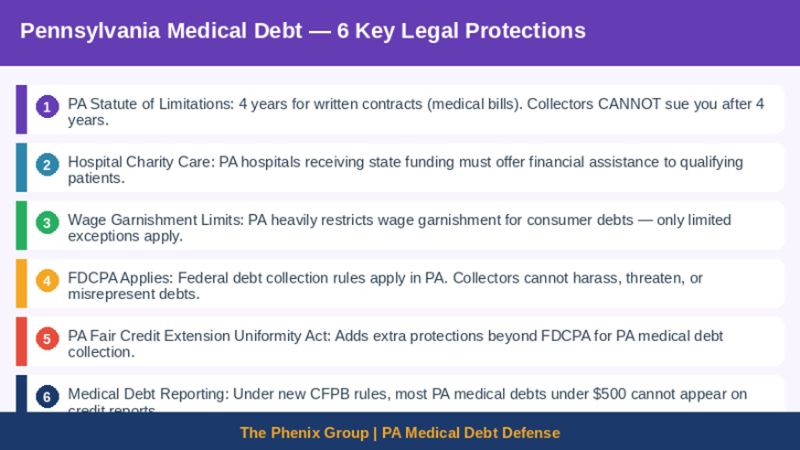
Pennsylvania adds another layer of protection through the Fair Credit Extension Uniformity Act (FCEUA), which applies state-level standards to debt collection activities within PA. Additionally, the Pennsylvania Unfair Trade Practices and Consumer Protection Law (UTPCPL) can be invoked against collectors who engage in deceptive practices.
Pennsylvania also has specific rules regarding hospital billing practices. PA hospitals that receive state or federal funding are required to offer financial assistance programs (charity care) for patients below certain income thresholds. If you were eligible for charity care and were instead sent to collections, you may have grounds for a complaint.
Consumers exploring professional help often ask do credit repair services work when trying to resolve medical collections and other negative marks.
The Statute of Limitations on Medical Debt in Pennsylvania
In Pennsylvania, the statute of limitations for written contracts (which includes most medical bills) is 4 years from the date of last activity. For open-ended accounts, it may be shorter. This means:
- A medical debt collector generally cannot sue you in Pennsylvania for debts older than 4 years
- Making a payment or acknowledging the debt in writing can restart this clock, be cautious
- You can still dispute the debt even if it’s within the statute of limitations
CFPB 2025 Updates: Medical Debt and Your Credit Report
The Consumer Financial Protection Bureau has been actively working to remove medical debt from credit reports entirely. Key recent developments:
- Since 2022: Paid medical collections are no longer reported on the three major bureaus
- Since 2022: Medical collections under $500 are no longer reportable
- 2025 CFPB Proposed Rule: Would ban all medical debt from consumer credit reports, pending final regulatory approval as of 2026
If HRRG or another medical collector appears on your Pennsylvania credit report, review it against these thresholds carefully. Many existing medical collection entries may already be removable under current rules. See our dedicated guide on removing HRRG medical collections.
When evaluating your rights with repair companies, it also helps to understand the Credit Repair Organization Act and what protections it provides consumers.
Frequently Asked Questions
Q: Can a Pennsylvania hospital send my bill to collections without warning?:
A: PA hospitals are generally required to notify patients of outstanding balances and available financial assistance before referring accounts to collections. If you were sent to collections without adequate notice or without being informed of charity care eligibility, you may have grounds for a complaint with the PA Attorney General’s office.
Q: How do I dispute a medical collection in Pennsylvania?:
A: File disputes simultaneously with the three major bureaus AND send a debt validation letter directly to the collector. In PA, you can also file a complaint with the PA Bureau of Consumer Protection if collectors violate the FCEUA.
Q: Does medical debt hurt my credit score in Pennsylvania?:
A: Medical collections can still appear on credit reports and lower your score, though recent rule changes have significantly narrowed what can be reported. Work with a credit repair specialist to identify any medical collections that may qualify for removal under current standards.
