

Natasha George | President, The Phenix Group | Licensed Mortgage Loan Originator | MBA, Texas Christian University
Natasha George is the President of The Phenix Group and one of the most credentialed voices in the credit repair and financial readiness space. With over two decades of direct experience in credit, mortgage lending, and consumer finance, she brings a rare combination of frontline industry knowledge and formal academic training to every piece of content published on this site.
Natasha holds a Master of Business Administration from Texas Christian University with a specialization in Data Analysis a credential that directly informs how she interprets credit reporting data, evaluates consumer risk profiles, and identifies inaccuracies across bureau files. This analytical foundation sets her guidance apart from general financial commentary.
She is also a licensed Mortgage Loan Originator (MLO), a federal designation that requires passing the NMLS-administered SAFE Act examination, background screening, and ongoing compliance education. This license gives Natasha firsthand, professionally credentialed knowledge of underwriting standards, lender overlays, and the direct relationship between credit scores and mortgage approval outcomes knowledge that most credit bloggers simply do not hold.
Throughout her career, Natasha has worked at the intersection of credit reporting accuracy, consumer protection law, and financial readiness guiding consumers, homebuyers, and business owners through some of the most consequential financial decisions of their lives. Her work is grounded in compliance with the Fair Credit Reporting Act (FCRA), the Credit Repair Organizations Act (CROA), and related federal consumer protection regulations.
All content published under Natasha’s byline has been developed in alignment with The Phenix Group’s attorney-engaged compliance review process. The Phenix Group operates under legal oversight to ensure all consumer guidance meets federal regulatory standards.
Natasha is also a wife and mother of two. She writes because she believes every American family deserves access to accurate, trustworthy credit information not just those who can afford a financial advisor.
Credentials at a Glance:
All content on this blog is for educational purposes only and does not constitute legal or financial advice. Content is reviewed for compliance accuracy before publication.
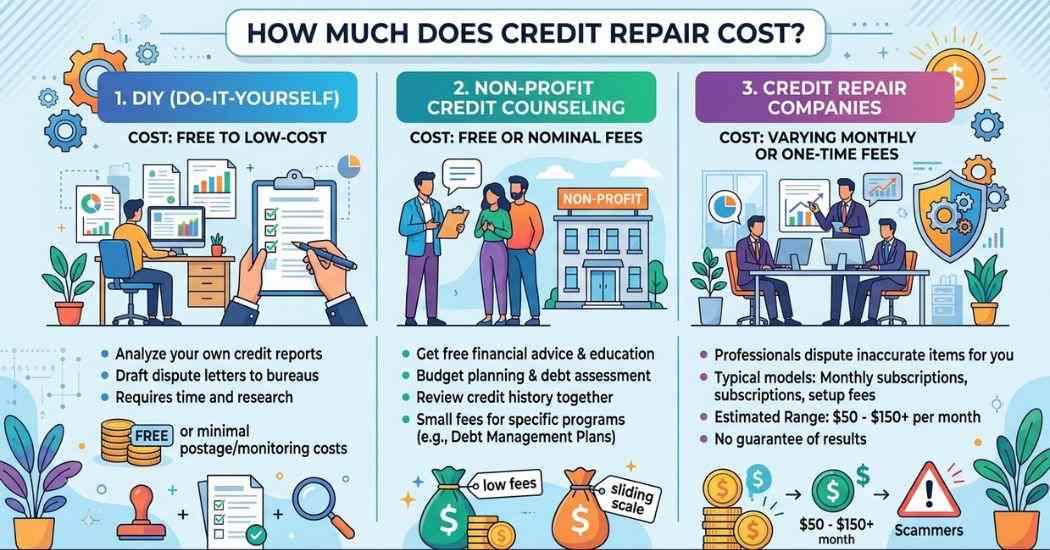
If you’ve ever Googled “how much does credit repair cost,” you already know the answers online range from vague to downright misleading. So let’s cut straight to the facts. Professional credit repair typically costs $50 to $150 per month, plus a one-time setup fee ranging from $15 to $200. Over

More than 77% of Americans over the age of eighteen have at least one credit card. Unfortunately, 54% of adults never check their credit scores. This puts them at an increased risk of fraud and identity theft–and many end up wondering how much a credit repair lawyer costs. The good

As you look into how to fix a bad credit score, you may be wondering whether or not it’s worth hiring a company that helps you raise those numbers. Between the credit restoration cost, the company’s reputation, and the type of work they’re able to do, you have a lot

If you’re reading this, you’re probably looking to repair your bad credit. When you’re already in a subpar financial situation, it can be difficult to justify shelling out money to fix it. In fact, your first question is probably, “How much do credit repair companies charge?” Today, we’ll answer this

You won’t need to wait too long before your credit-building efforts pay off. Most likely, you probably had your first credit score around six months after getting your first credit card or loan. That said, building good credit takes a bit longer, because you need to allow time for your

By now, you may have heard about Afterpay or seen it advertised at your favorite store’s online checkout. This ‘buy now, pay later’ program lets you pay for your purchases in four interest-free installments instead of all at once. You may be wondering, though, whether or not Afterpay affects your